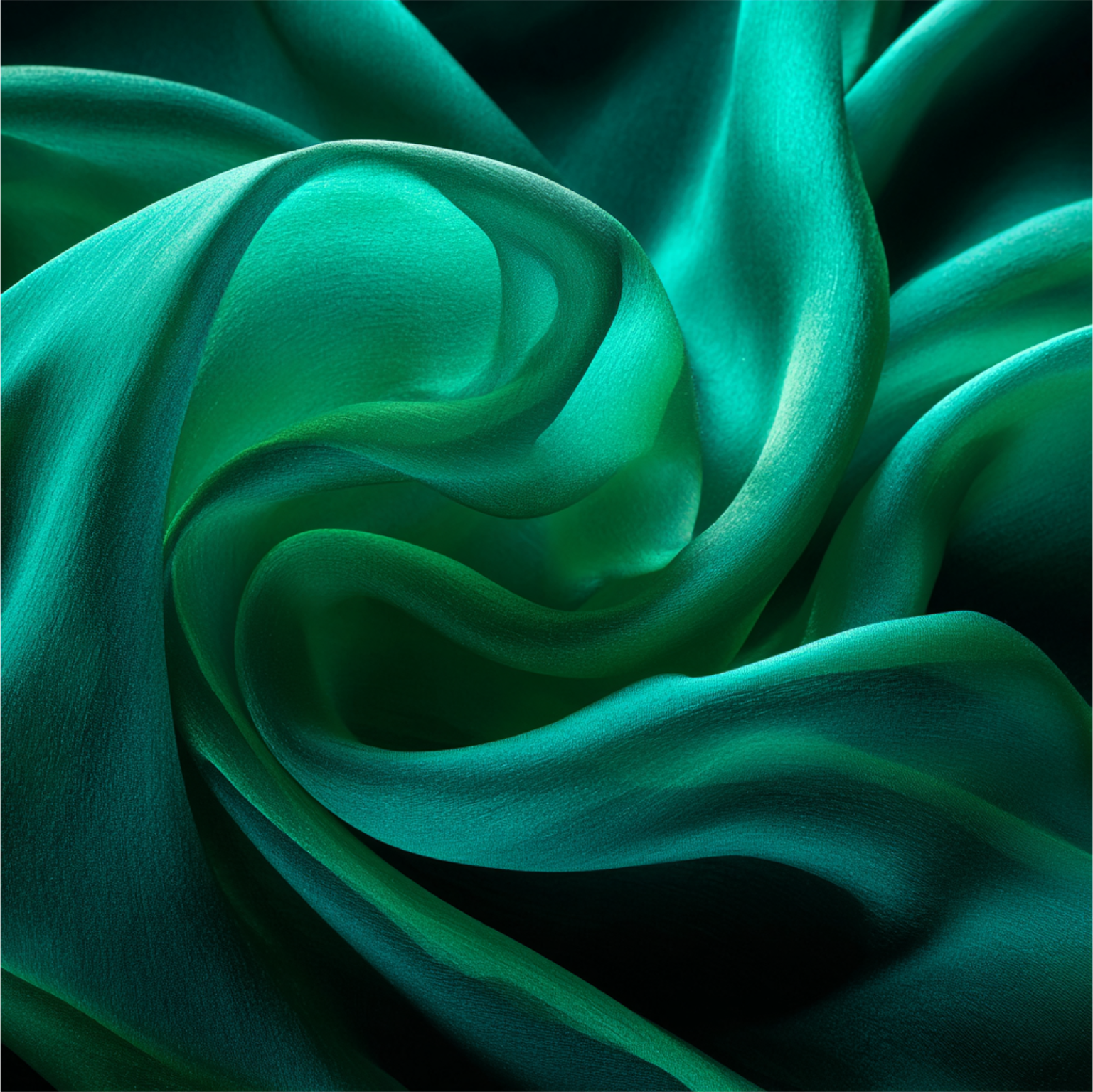
Silk, often called the “queen of fabrics,” has a history steeped in luxury and intrigue. Sericulture—the cultivation of silkworms—began in ancient China around 5,000 BCE, where silk was reserved for emperors and nobility. By the Silk Road era, it had become a symbol of wealth, traded across Asia, Europe, and Africa. Today, silk remains a benchmark for elegance, valued for its incomparable softness and luster.
Silk is produced by silkworm larvae, which spin cocoons of a single continuous thread (up to 900 meters long). These cocoons are boiled to soften the silk, then spun into yarn. The result is a fabric with a natural sheen that catches light from every angle, giving it an almost ethereal quality. Silk’s protein structure also makes it hypoallergenic, gentle on sensitive skin, and temperature-regulating—cool in summer, warm in winter.
Beyond evening gowns, silk is used in lingerie, scarves, and even medical sutures. Fun fact: In the 19th century, silk was so valuable that it was used as currency in China. Whether you’re wearing a silk blouse for a special occasion or draping a silk scarf over your shoulders, this fabric exudes sophistication and timeless charm.